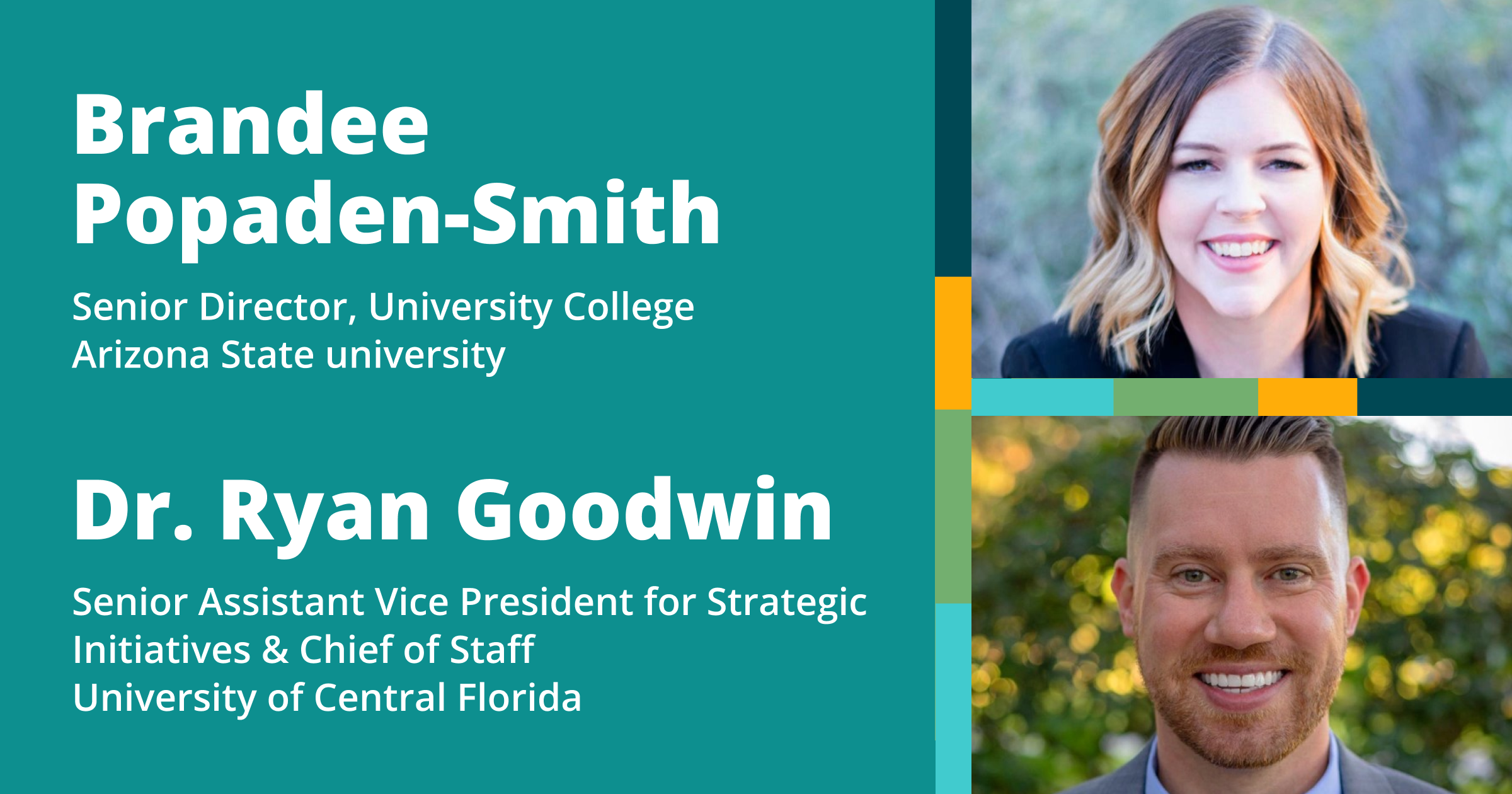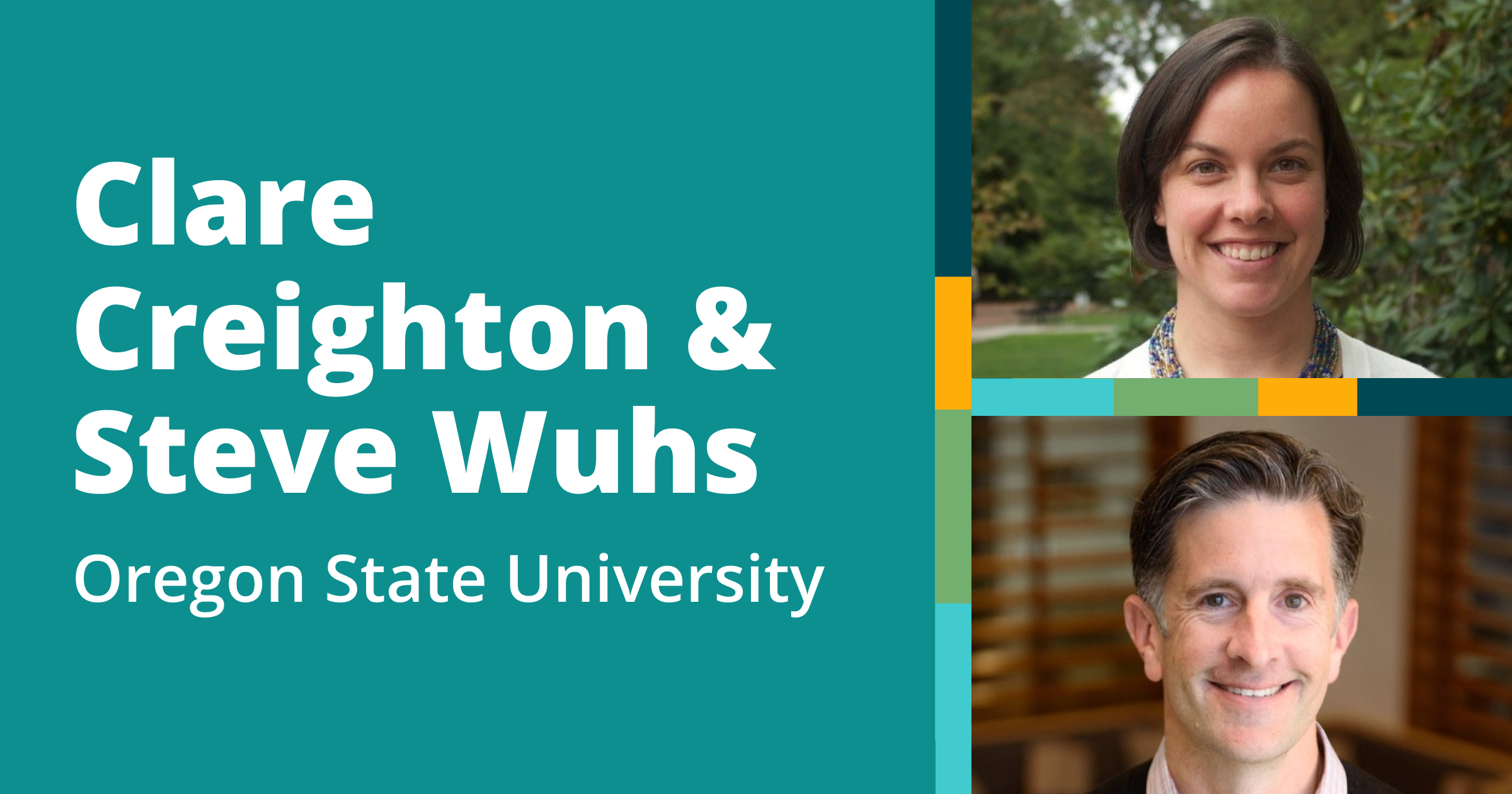
What scaling means, why it’s often hard to implement change, conditions that should be met, and how our completion grant programs represent a model of successful scaling.
Jennifer Sobanet, chancellor of University of Colorado Colorado Springs, discusses accepting the emotional weight of leadership, the need for ongoing executive coaching, her own nontraditional path to leadership, and how a foundation in the humanities will prepare students for the future.
John Fry, president of Temple University, reflects on the lessons he’s learned moving from consultant to university president and why higher ed leaders must better understand public perceptions and strengthen their civic partnerships.
Harrison Keller, University of North Texas president, discusses the value of soft skills, the smart use of actionable intelligence, the practical reality of universities adopting AI, and giving people something to be for rather than against.
Kenneth Christensen, chancellor at University of Colorado Denver, discusses removing barriers for nontraditional students, embedding in his campus community, clarity and purpose in challenging times, speaking truth with civility, and modeling urban public universities.
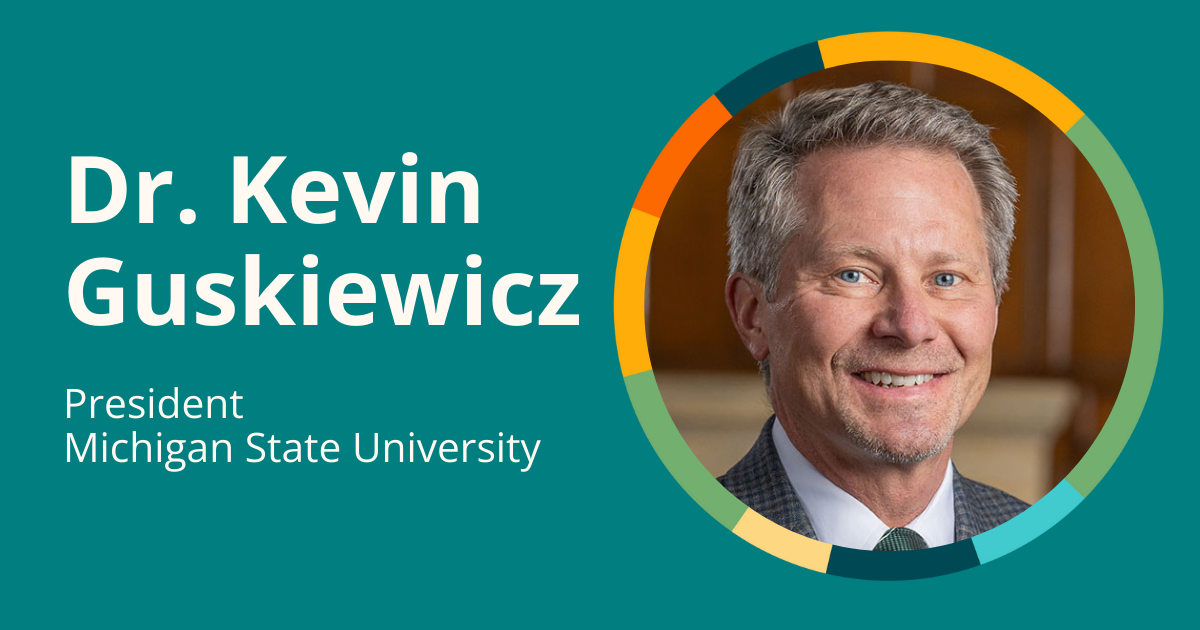
Kevin Guskiewicz, president at Michigan State University, discusses turning a challenge into an opportunity, the importance of trust and good will in any enterprise, how to focus on delivering the ROI for college education, and the enduring power of curiosity.
Institutions are playing a more hands-on role in preparing young people for greater things after earning their degree. At the 2024 University Innovation Alliance National Summit, we heard from two speakers spotlighting two very different initiatives, each striking a similar chord of mentoring and supporting young people to launch their careers.
In his powerful, straightforward keynote at the UIA National Summit, Dr.
Angela Duckworth, co-director of the Penn Wharton Behavior Change for Good Initiative, discusses the threshold for institutions joining the program, how it supports first-year and transfer students, pitching it to administrators, and using the resulting data.